Subscribe in a reader
Tuesday, 23 June 2009
030509 Curry puff at Hock Seng Two, SS2 and durian van & man
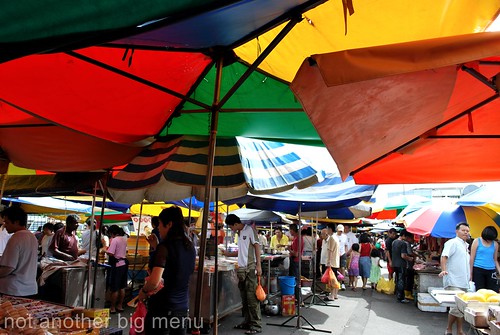
There is no feeling similar to that of being in SS2 (the centre of the Universe). The smells, sights and sounds are unique, though sometimes not that palatable, especially when the bin men have not been around for a while.
Took some pictures of the daily bustle, with short narratives below them.
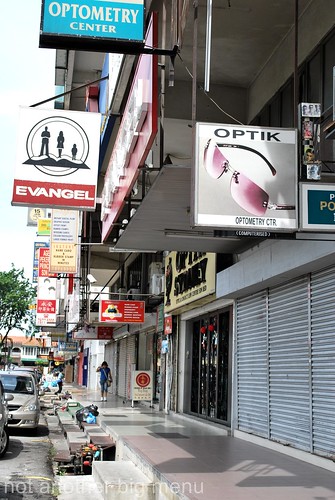
This is one of the rows of shop houses that make up the SS2 square. You can find almost anything and everything in these shops. If you can’t find it here, you’ll probably find it in the market.
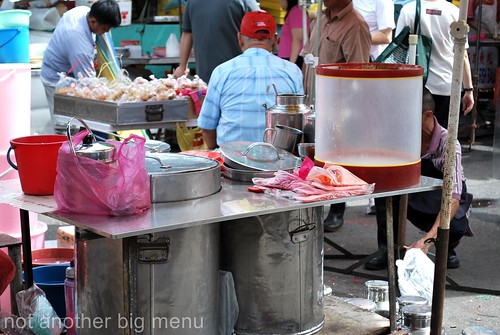
The tao foo fah stall in the market, which seems to be quite popular as the soy bean milk in the red and transparent container is completely sold out. Although there are 2 of these stalls almost next to each other, one of them clearly gets more customers than the other one. Word of mouth is the main mode of advertisement in the market, and if someone says that the first stall is better than the second one, that’s the one people go to.
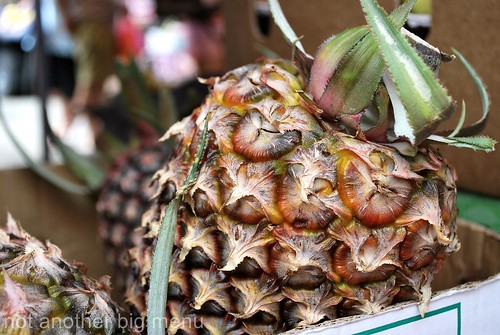
The fruit stall sells mainly local fruits, and if you’re wanting to buy imported fruits, you’d best be going to the supermarket for it. The conversations mainly go like this.
‘Hey, are the fruits today nice?’ asks the customer.
‘Only the best and the nicest!’ says the fruit seller.
As far as pointless questions go, this has to be at the top of the list.
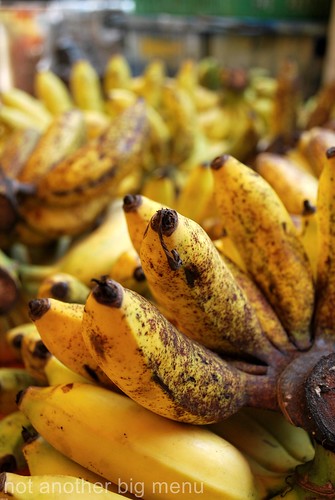
Bananas, probably as nice and as sweet as the pineapple if you ask the seller.
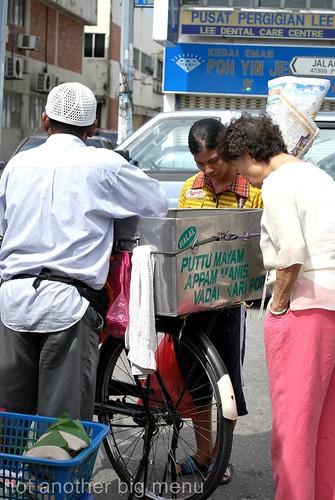
This is the putu mayam seller, who goes around selling his items around the square. Putu mayam is similar to rice vermicelli eaten with brown sugar and shredded coconut. The common knowledge is that you should only buy this before noon as the sun tends to make the coconut go bad if it’s been in the metal container for too long.
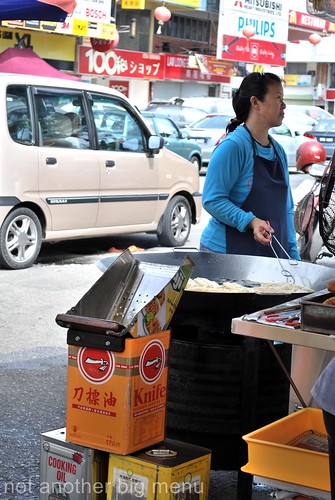
This lady is frying yau char kuay (Chinese crullers) in the huge wok, and the thing she’s holding in her hand is what she uses to turn them around in the oil so that they get an even frying. The metal container by the side of the wok has been fashioned from a used oil tin, and is now used as a holding tray for the freshly fried crullers, to allow the oil to drip away.
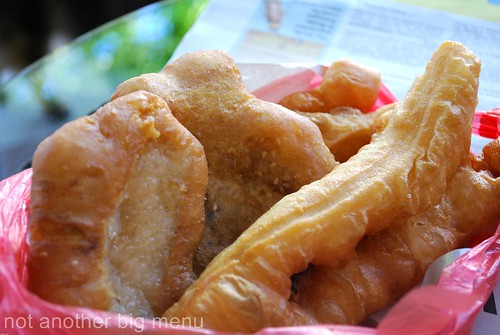
Crispy on the outside, and if freshly cooked, soft and fluffy on the inside, these Chinese pastries are really delicious when dipped in hot black coffee or Milo. The stale (well, not mouldy stale, but just not so fresh) versions are usually cut into bite sized pieces and dipped in Bak Kut Teh (herbal pork soup).
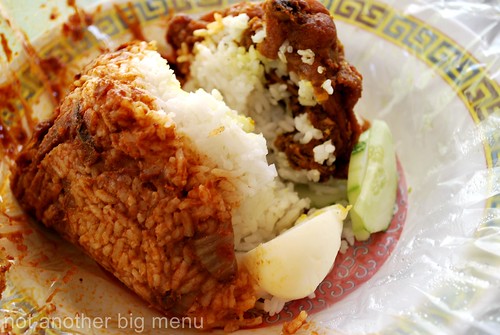
This is a packet of nasi lemak. Not just any common packet of rice, this is the nasi lemak bought from Norrul, the man on the motorcycle who goes around selling these things almost every other day.
It’s much tastier than it looks.
Commonly eaten for breakfast, it consists of coconut-flavoured rice topped with sambal (chilli and onion mix), fried anchovies, hard boiled egg, peanuts, cucumber slices, and there is the option of adding either chicken or beef if you’re one of those greedy ones who like more (like me).
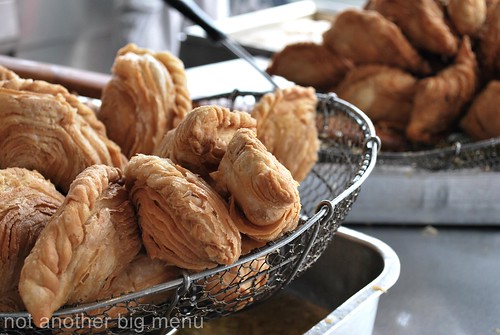
Contrary to the (by now) stale joke, this is not what you get when you mix a Mariah Carey soundtrack and a Puff Daddy song together (Carey-Puff, get it?).
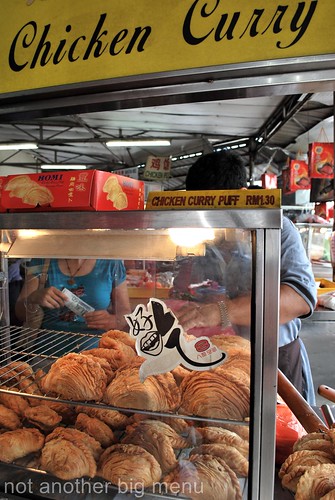
It is actually puff pastry containing a curried chicken and potato mixture, commonly eaten as a snack. It looks similar to the English pasty, but doesn’t feel as dense when eaten, possible because it’s puff pastry as opposed to the shortcrust pastry used in the Cornish pasties.
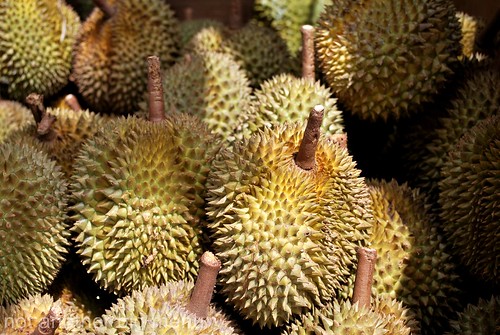
The King of Fruits – Durian. Or more commonly known as fermented socks.
To the wimps, that is. I love it, and don’t understand why some people don’t.
Inside the thorny shell, there are little yellow parcels; each one wrapped in a transparent yellowy film of skin, enveloping sweet, bitter, creamy flesh, with texture similar to that of creamy mash potato.
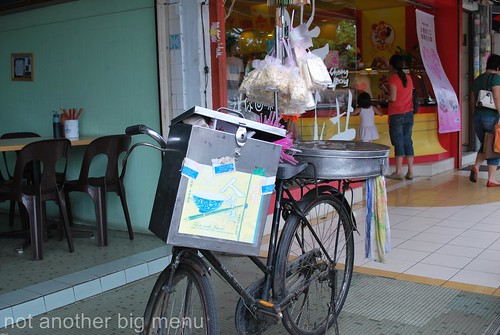
You don’t usually see these ting-ting sweet sellers these days. The round tray at the back of the bicycle contains hard, stalactite-like sweets which is chiseled away, bit by bit, when a customer requests for a portion. The sound made by the metal chisel against the sweet is ‘ting’ which is why the sweet is called the ‘ting ting’ sweet.

Saturday, 20 June 2009
160509 M’sia Taiping home-style cooking
The Chinese way of showing warmth and welcome to guests is what I consider to be the best way of all; offer them lots and lots of food. Instead of saying ‘How do you do’, or ‘How’s the weather’, the common way of greeting someone (direct translation) is
‘Have you eaten?’
Perhaps this explains my obsession with food.
When we were in Taiping, my really generous and kind relatives insisted on cooking us lunch, despite us having had quite a filling breakfast. Thing is, this is the foundation of all the recipes we know, as in, they originated from here. How could we resist?
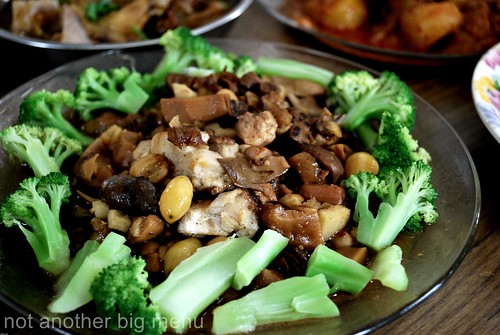
My relatives started their cooking at 8am that day, and this really made us appreciate it even more. They chopped the vegetables, marinated the meat, boiled the soup and just cooked and cooked away until it was lunchtime and we arrived to find a table full of plates, full of food, and lots of it.
This is the eight-treasure chicken dish, which was a first-time dish tried out that day. The eight treasures refer to the eight ingredients in the dish. From what I could see, there were Chinese wood-ear mushrooms, broccoli, Chinese mushrooms, gingko, chicken, another type of Chinese mushrooms, and 2 other ingredients which I could find but I’m sure went into the dish to complete the flavour.
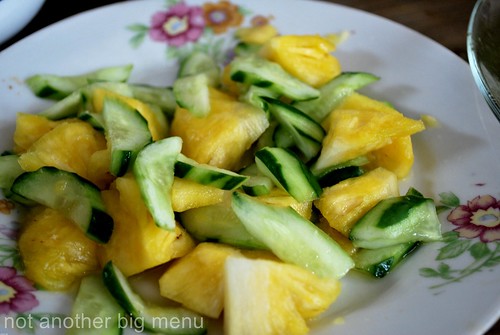
Pineapple and cucumber pickle, which was so refreshing in its sweet, sour, light and fresh flavours. Perfect as a palate cleanser in between other dishes.
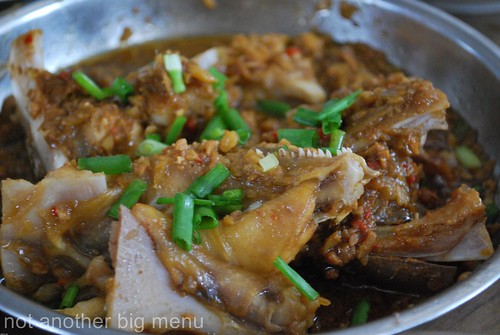
Yellow bean steamed fish head, and despite its exotic sounding name, this is quite a commonly-cooked household dish. Consisting of tau-choo (yellow bean paste) and chopped chillies, the fish head is steamed which makes the jelly-like textures of the meat even softer and more absorbent to the sauces.
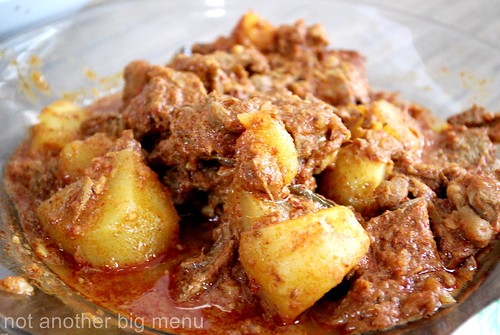
Wild boar curry – now this is not an ordinary dish in any home-cooking. Wild boar is not commonly sold in the markets, so not many people know how to cook this dish, but my relatives have perfected the skills to make the pork extremely soft and tender, so much so that it almost falls apart when chewed. The potatoes are boiled before being cooked in the curry so they’re already fluffy and can absorb all the flavours from the curry.
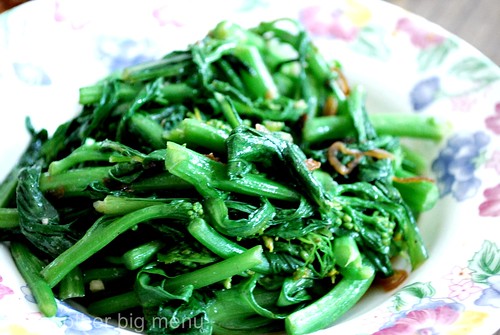
Stir fried choi sum with garlic, crunchy and al dante with just a hint of garlic – delicious.
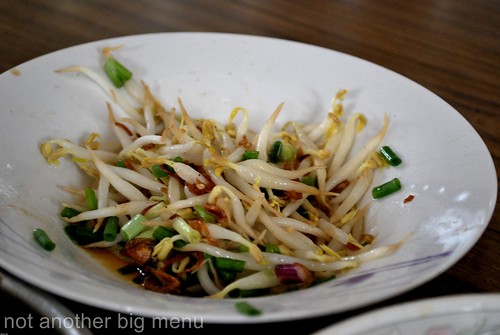
Ipoh beansprouts which are famous for being shorter than the other type of beansprouts, and juicier. The length of these sprouts actually increase the longer you leave them uncooked, so it’s best to buy them fresh on the day of cooking and have them earlier ie for lunch. Stir fried or quickly blanched in hot water, and garnished with fried shallots and some spring onions, this is one of my most requested for dishes.
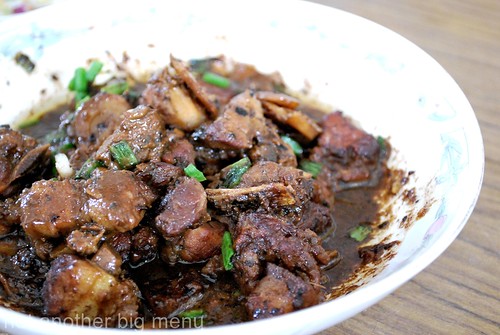
Black bean pork ribs (tau si pai kuat) – another Taiping specialty. Pork ribs cooked in lots (and I mean lots) of black beans, and stewed until the meat becomes fall-off-the-bone tender, the gravy is best eaten with hot rice.
Such lovely home-cooked dishes from lovely people.
Tuesday, 16 June 2009
MJ Cafe, SS2 by the morning market, Malaysia
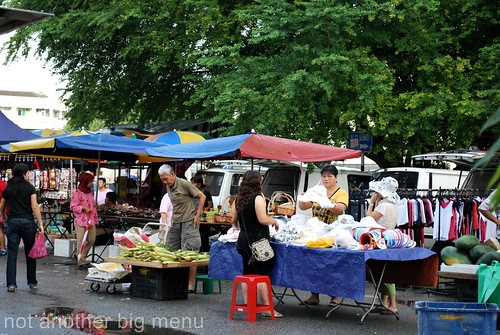
By the SS2 morning market, there are lots and lots of stalls. They sell pretty much anything and everything you’d want to buy (if you can’t find it here, you probably don’t need it much).
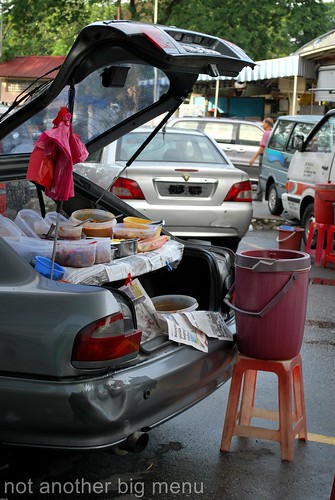
Most of these stalls are small businesses run from a portable stall such as the one seen here, selling nasi lemak.
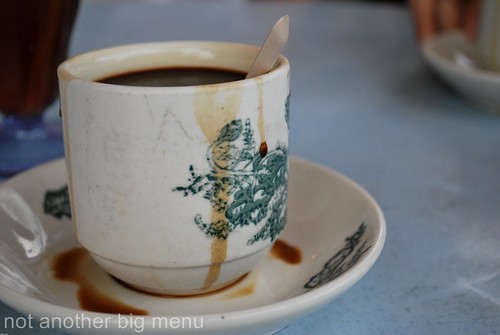
There is one cafe just by where all the action is called MJ Cafe which started off being one of those places people would consider going to but never actually went to, to what it is now, which is a popular breakfast spot for market-goers and people waiting for the market-goers.
They have quite a bit of their meals in sets, working out slightly cheaper in the set than on its own so even though I don’t want the coffee or the egg, the Mathematician in me feels compelled to order the set as I get more value for money.
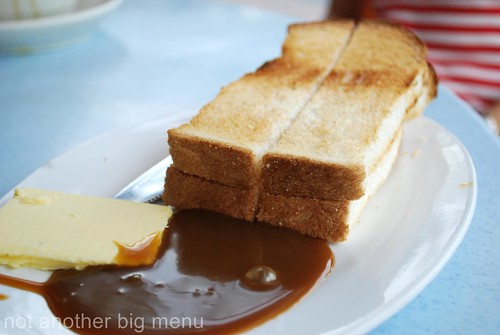
MJ Toast set RM4.80
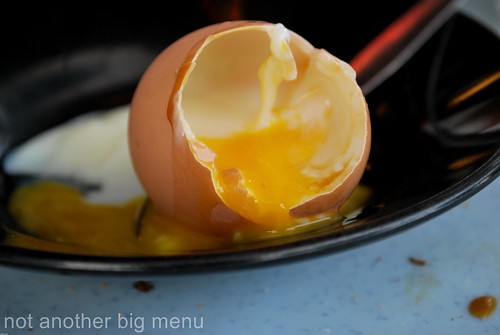
The toast set comes with toast served with kaya and butter, a drink of your choice, and 2 half-boiled eggs, perfect when eaten with a dash of soy sauce and a sprinkling of pepper.
This is not common toast, no it’s not. This is toast made from the traditional type of bread used in Malaysia in coffee shops, which is a lighter and less processed than the other types of bread here. When toasted, the lightness gives way to crunchiness, and the butter and kaya sit on top of the bread making the perfect mouthful.
Kaya is commonly known as coconut jam, but I disagree with that name, because you don’t describe jam as strawberry kaya so why call it by another name. It’s made with eggs, coconut milk, sugar and screwpine leaves (pandan leaves), slowly cooked in a pot filled with water and with another container in the pot with the kaya. This mixture has to be stirred all the way through cooking, so making this requires quite a bit of time and effort.
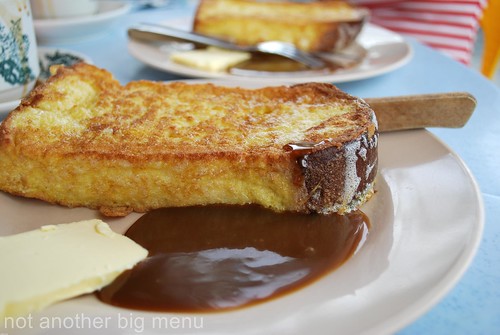
MJ French toast
Made with the same bread as the toast, the egg mixture absorbs very well into the bread, and when fried, this becomes the fluffiest slab of eggy bread ever. Eaten with kaya as all things should be, this breakfast provides me with all the energy I need. For about a week or so.
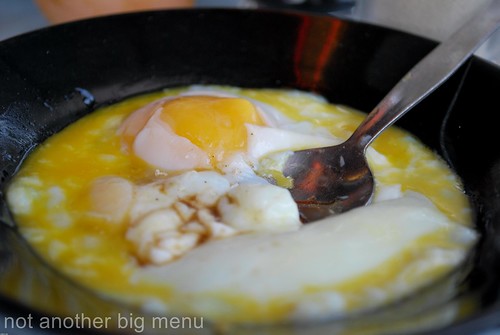
Would I recommend this place? Indeed I would, we like it very much.
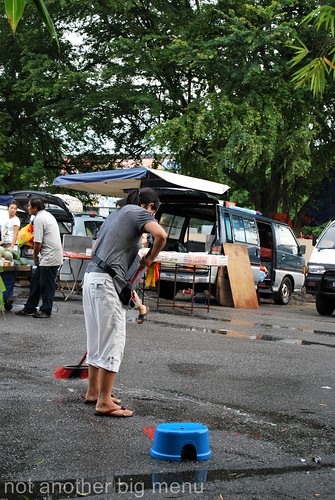
You can even watch as the market stalls wind down after the hustle and bustle, while sipping hot tea, what’s not to like about this?
Friday, 12 June 2009
100509 Restoran O&S, 39, Jalan 20/14, Paramount Garden, 46300 Petaling Jaya, Selangor, Malaysia
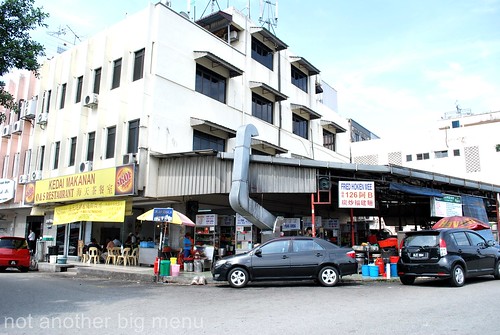
When we want to have a quick, fuss-free and very tasty lunch, this is where we usually go to. Coffee shops like these are aplenty in Malaysia, but not all of them manage to find the right blend of hawker stalls to make it as successful as this one. In this moderately large coffee shop, there are stalls serving almost any type of hawker dish you may want.
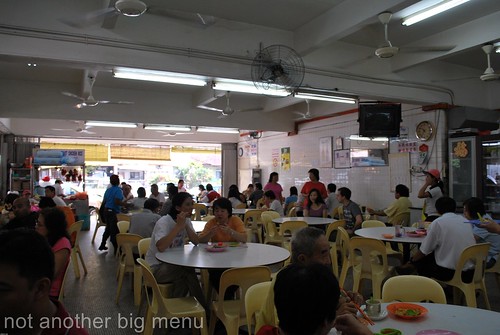
Come at about 11.30am and it’s almost impossible to find an empty table, which is why during the office lunchtime, those who are coming alone or with another person usually end up sharing tables with other diners. Not necessarily a bad thing as you can then pretend that you didn’t actually eat all those five meals by yourself.
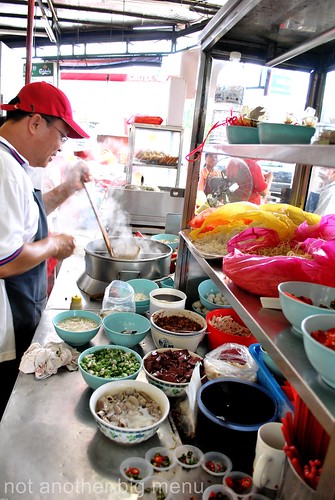
This is the stall that makes me come back to this place again and again and again. Him and his wife sell Kuay Teow Theng which, to explain it in plain terms (but not necessarily achieving the desired effect) is hor fun in soup.
Not just any hor fun in soup, but my favourite (and thus considered the best of its kind). Each bowl on the counter holds some lovely stuff, all which go either into the soup, or on top of the noodles when they are served. It is convenient for him to pick them up as he goes along, which then ensures that the noodles are left on the counter for as little a time as possible, thus getting to my hungry self piping hot and just so fresh.
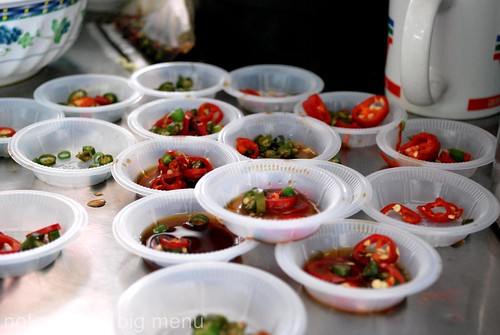
Even the chilli (used as dipping sauce for the noodles) plates are stacked in such a way as to allow minimum time needed in picking it up. Efficiency at its best.
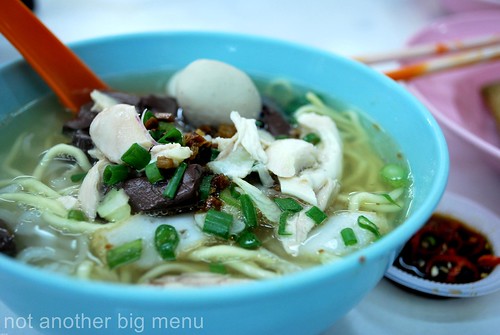
When this bowl arrives at the table, it usually doesn’t stay there long (not when I’m there anyway). There are many stalls selling kuay teow soup I’m sure, and there are lots of good ones also, but this one beats the rest of them in my opinion.
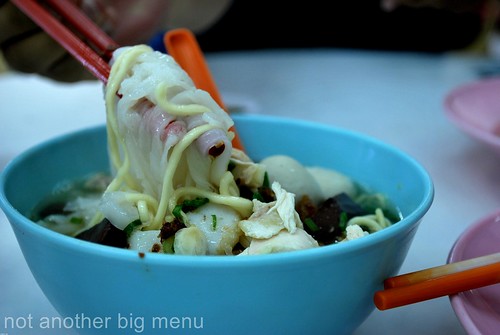
Why? For me, it’s because of the texture of the kuay teow from this stall. It’s soft, but not mushy soft. It’s more, chewy-soft and slightly bouncy if you know what I mean. When you take the first mouthful and bite on it, the noodle kinda bounces off, with a little bit of elasticity in it back into the bowl. It’s very smooth, and doesn’t seem to get soft despite being soaked in the soup.
The soup itself is also another favourite of mine. Using what I assume to be chicken and pork as the base of the soup, it’s sweet, meaty, and has a flavour I can’t describe or find in any other noodles from other stalls. Umami is the closest word I can come up with (according to vinesugar.com, umami is ‘the fifth taste beyond sweet, sour, bitter, & salty’).
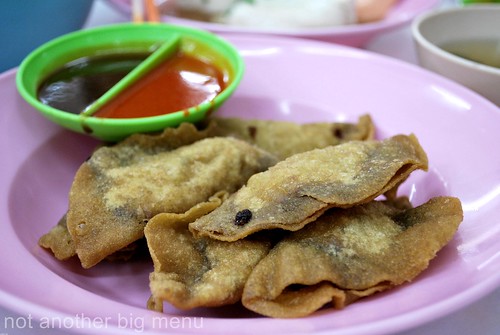
If having the best kuay teow soup in town is not enough for you (and it never is, really) there is also a stall selling Yong Tao Foo (vegetables stuffed with chewy fish paste). The most basic yong tau foo is the fried sui kao (fried dumpling) consisting of a prawn and pork mince mixture.
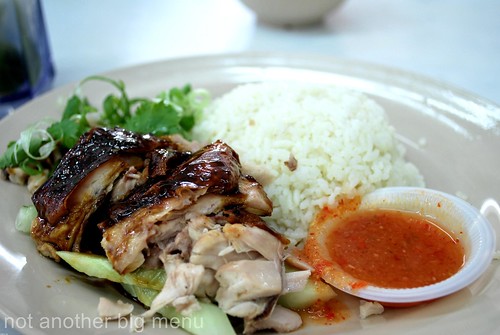
Still not enough? I agree. There is chicken rice (there is ALWAYS a chicken rice stall in these coffeeshops). Chicken rice is a very common dish in Malaysia, usually eaten for lunch. It is such a staple that I have the Chickenomics theory (mine, by the way and nothing to do with the study of chickens according to urbandictionary.com) formulated from this dish.
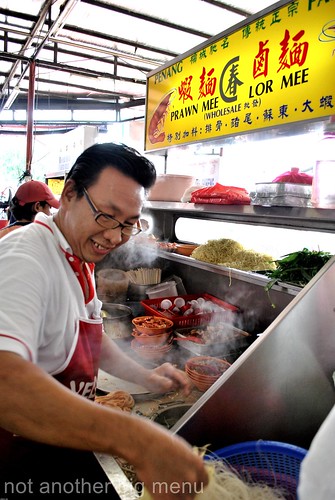
Our friend, the owner of the prawn noodles stall. We’ve been eating from his stall for such a long time that he doesn’t even mind posing for us without us ordering anything from him. Look at the smile, and how fast he is at preparing those noodles. His prawn noodles are one of the best in town, always consistently delicious, the soup’s full of prawns, and the chilli is a must-have in the soup.
Most definitely recommend this place, but try to come before the lunch rush hour if you want to find a table.
Sunday, 7 June 2009
150509 Taiping style
When we were in Taiping, I took so many pictures of the place, mostly without any theme or category, thus this post is all about the relaxed and easy-going way that is the Taiping style. As we go along, I’ll put captions at the bottom of some of the pictures to explain what the picture is about.
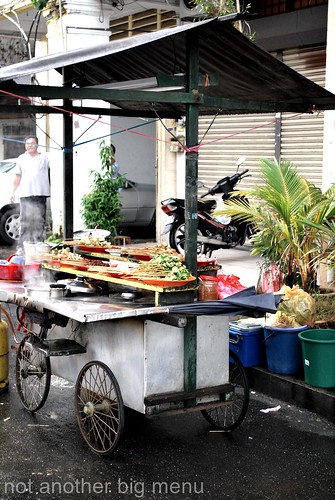
A lok-lok stall in Taiping – a common sight many years ago, not so common these days
Taiping is a little quiet town in the state of Perak; located somewhere near the middle Western coast of Peninsular Malaysia. Known as the wettest town in the country, it is also famous for its Lake Garden, and once famous for its zoo.
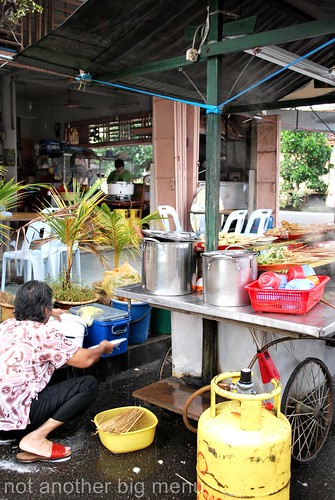
The owner of the stall doing the washing up – she gave me a huge grin when she realised her stall was being photographed
Back many years ago, this town was full of hustle and bustle. People would throng the narrow streets flanked by rows of olden-style colonial shop-houses, ringing the bells on bikes and saying hi to the people who went by. Whenever new movies were released, a selected few would have their posters specifically painted to be posted onto the huge billboards that were put up in front of the cinemas.
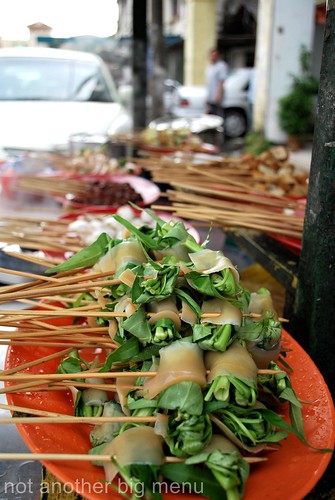
An example of what is sold at the lok-lok stall; this is the sotong kangkung which is cooked by dipping it in boiling water from the pot in the stall, and eaten with a mixture of sauces
These days, the town is much less busy, and the sounds of hustle and bustle are not as frequently heard. The streets have more cars parked on them than people, and the 8 independent cinemas which used to flourish as the centre of the social scene have all but closed down, giving way to one huge multi-screen cineplex at the edge of town.
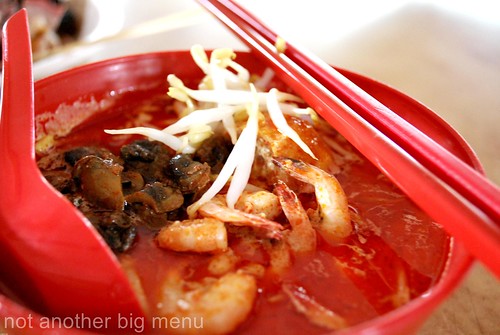
Curry mee from the Lake Garden food court in Taiping
You can still get good food in Taiping, though quite a few of the better ones have upped and left for the bright lights and business opportunities in Kuala Lumpur. The ones that have remained in Taiping continue to be frequented by their loyal customers who have dined with them for many years. Though alot of the street stalls have moved to cleaner and bigger food courts, the dishes served up remain the same – each one uniquely Taiping in flavour and style.
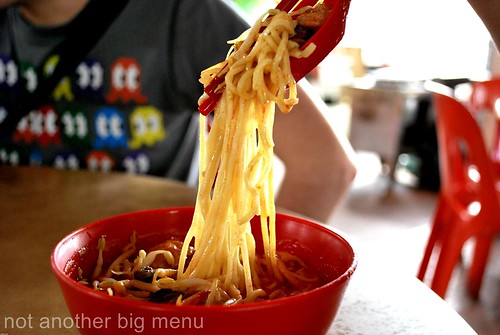
Curry mee in all its deliciousness
Tourists are few and far between in this little town. That was why my camera and I were stared at alot of the time, but true to their friendly form, most people gave huge grins when they realised I wanted to snap pictures of them.
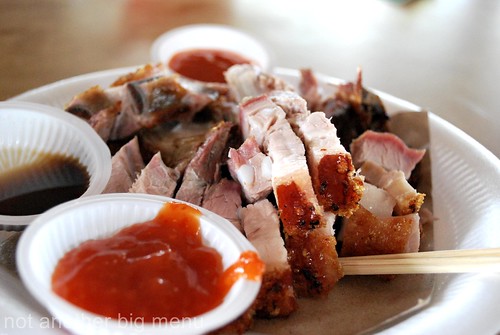
A plate of siew-yuk (roast pork), served Taiping-style with chilli sauce
The way in which food is served here differs quite significantly to the way food is served in the larger cities. If I had to liken it to something, I’d say that the way food is served here is pretty much the same way it was served 20 years ago. Where many restaurants in other towns focus on small portions and intricate presentation, what you get here is usually good old fashioned practicality on a plate. Big pleasing portions for prices you wouldn’t hesitate at, and tasty food without much fuss.
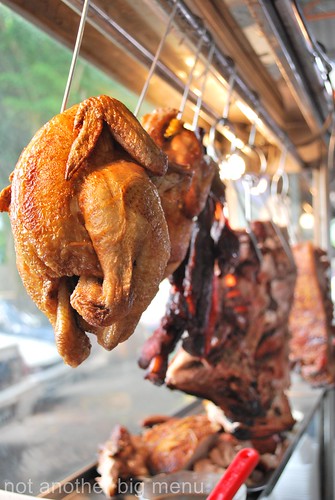
Assortment of meats on display to be ordered by the customer
When in Taiping, there are lots to do, lots to see, hear, smell and lots to eat. Start off by going for a big, steaming hot bowl of kuay teow at Restoran Kakak, served with a side dish of chicken feet and fishballs. Go for a stroll around Lake Garden, taking in the hundred year old trees with their branches reaching out towards the lake. Go up Bukit Larut check out the dense trees and monkeys, enjoying the humid green scent.
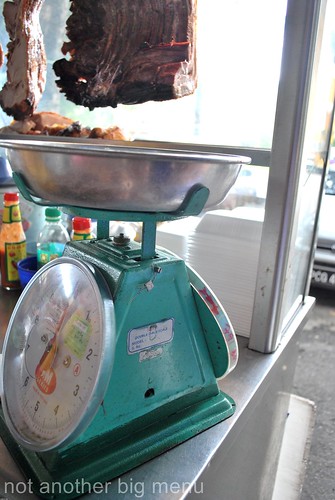
A scale used in weighing the siew-yuk
Have a wander around the markets, buy the kuih (traditional pastries) on offer, try the local drinks and snacks, have some rojak (mixed fruit salad). Sit in the afternoon sun and when it gets too hot, go for a cold, refreshing shaven-ice cendol dessert.
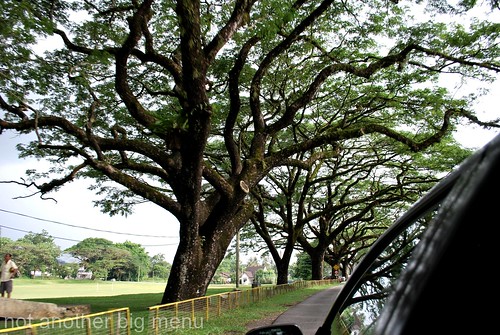
A wander through Taiping Lake Garden
Who says a small little town can’t captivate your interest?
Thursday, 4 June 2009
070509 Kanna Curry House, Section 17 on top of the hill, Malaysia
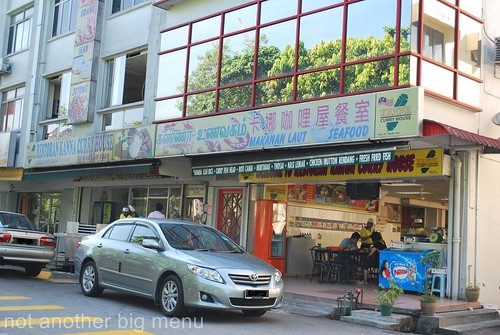
When I told some of my friends who were not from Malaysia that we frequently have curry with rice for breakfast, most of them looked like they were seriously considering a move to the country.
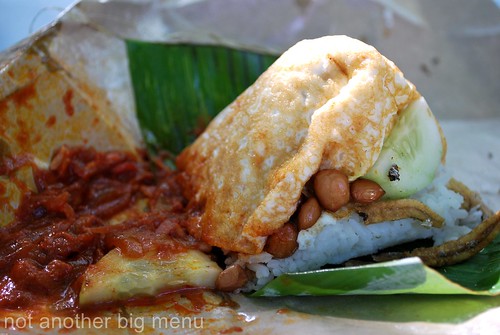
The dish that I’m referring to is the ‘nasi lemak’, which translates literally to ‘creamy rice’, as the main feature of the dish is the rice cooked in coconut milk, and served with ‘sambal’ (a spicy chilli and onion paste), ‘ikan bilis’ (fried anchovies), fried or hard boiled egg, and sometimes, fried chicken.
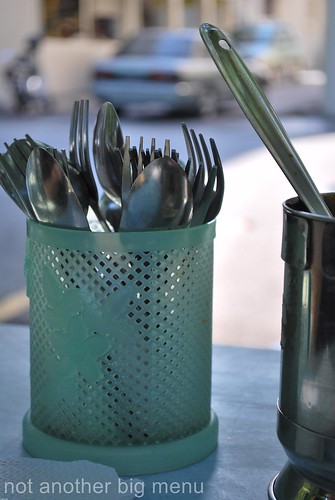
We like going to this restaurant as it has an outside eating area under some trees, and it’s quite windy and airy. Some people may consider falling leaves in food as something unacceptable, but I think of it as extra greens in your meal. Ants on the table? Extra protein.

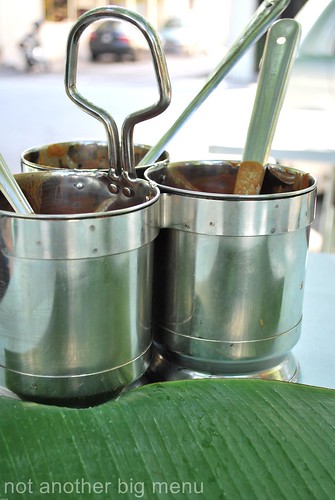
This is the standard three-curry bucket that is put on every table, consisting of dhal, fish curry (without the fish) and chicken curry (without the chicken). Used as a sauce for most of the plain dishes, it’s free and tasty.
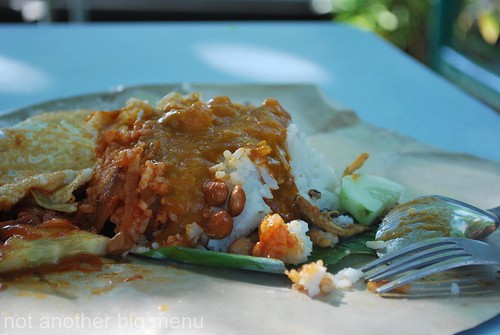
Nasi lemak RM1.60
This dish comes served in a banana leaf packet as it adds flavour and fragrance to the dish. The rice is drenched in the sauce but if you want more, there’s always the curries in the curry bucket. Eaten with a spoon, lots of enthusiasm, and a nice gust of wind, this is one of the nicer things to have for breakfast.
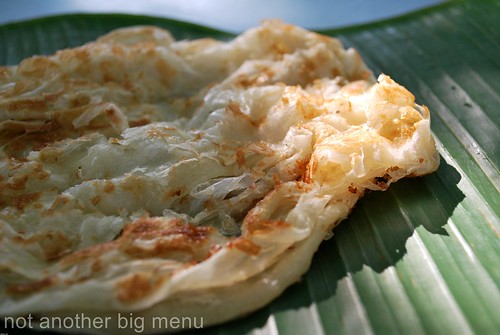
Roti canai RM1 a piece
Known also as roti paratha in England and some other countries, this is a bread similar to puff pastry, which is made by flipping a piece of dough and folding it over and over again until there are enough layers in it. It is lightly fried over a flat pan and can be served square or round, though we sometimes request for it square as it means it’s freshly made. This is because at any one time, there are usually quite a few of these ready-made, and reheated on the pan before being served, but these are of the usual round variety, so asking for a square one usually means that a fresh piece will be made for you.
Would we come back to this restaurant? Most definitely one of our favourites.